Your Ecommerce website may have hundreds of products, but if Google can’t crawl important pages or customers can’t find the right information, those products may never get the visibility they deserve. This is where the debate of On-Page SEO vs Technical SEO becomes important.
Many business owners ask, “Should I focus on content and keywords, or should I improve my website’s technical performance first?” The truth is that both are essential for long-term success. A balanced SEO strategy for Ecommerce helps improve rankings, drive qualified traffic, and increase conversions.
In this guide, we’ll explain the differences between On-Page SEO Services vs Technical SEO, why each matters, and how to use them together to maximize your Ecommerce website’s performance.
What Is On-Page SEO?
On-Page SEO for Ecommerce refers to optimizing the visible elements of your website so search engines and customers understand your products and pages.
It focuses on improving the content and structure of individual pages.
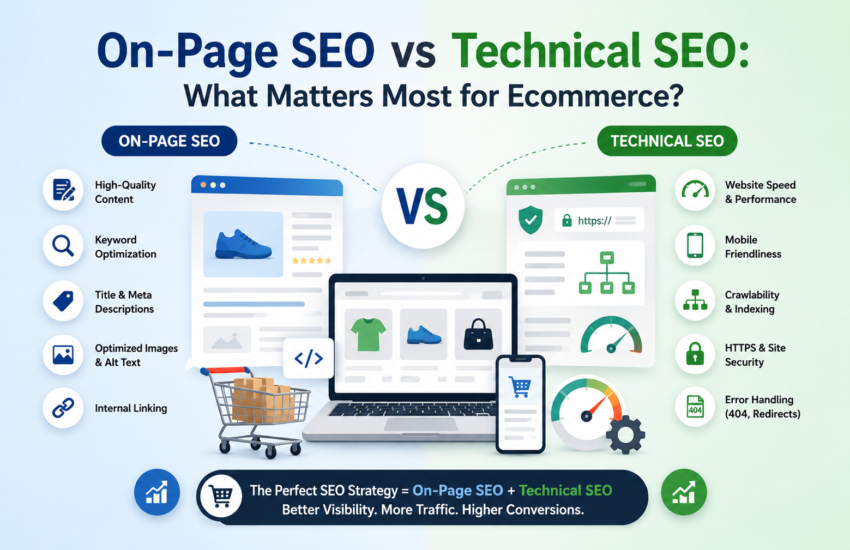
Key Elements of On-Page SEO
- Keyword-optimized product titles
- High-quality product descriptions
- Meta title optimization
- Meta description optimization
- SEO-friendly URL structure
- Internal linking
- Image SEO
- Product page SEO
- Category page optimization
For example, instead of using a product title like:
Running Shoes
Use:
Men’s Lightweight Running Shoes for Marathon Training
This helps Google understand your page while making it more attractive to potential customers.
What Is Technical SEO?
Technical SEO for Ecommerce focuses on improving your website’s infrastructure so search engines can crawl, index, and rank your pages efficiently.
Unlike On-Page SEO, technical optimization happens behind the scenes.
Important Technical SEO Elements
- Website indexing
- Crawlability
- XML Sitemap
- Robots.txt
- Canonical tags
- HTTPS security
- Page speed optimization
- Core Web Vitals
- Mobile-friendly website
- Broken link fixes
- Schema markup
Technical SEO ensures that even large Ecommerce stores with thousands of products remain fast, organized, and accessible to search engines.
On-Page SEO vs Technical SEO: Key Differences
| On-Page SEO | Technical SEO |
| Optimizes content | Optimizes website infrastructure |
| Improves keyword relevance | Improves crawling and indexing |
| Focuses on user engagement | Focuses on website performance |
| Includes titles, descriptions, and images | Includes speed, security, and structured data |
| Helps improve content rankings | Helps search engines access your pages |
While both serve different purposes, they work together to improve Ecommerce Search Engine Optimization.
Why On-Page SEO Matters for Ecommerce Websites
Every product page represents an opportunity to rank in search results.
Effective on-page optimization is an important part of Ecommerce SEO Services, helping businesses:
- Increase product visibility
- Improve click-through rates
- Target high-intent keywords
- Reduce bounce rates
- Improve user experience
- Generate more organic traffic
A well-optimized product page gives customers the information they need while helping Google understand what you’re selling.
Why Technical SEO Matters for Ecommerce Websites
Even excellent content won’t perform well if your website has technical issues.
Common technical problems include:
- Slow loading pages
- Duplicate content
- Poor mobile experience
- Broken links
- Missing canonical tags
- Indexing errors
These issues can prevent search engines from properly ranking your pages.
Regular Technical SEO Audits help identify and resolve these problems before they impact your rankings.
Which Is More Important for Ecommerce?
The simple answer is both.
Imagine your Ecommerce website as a retail store:
- Technical SEO builds the foundation, ensuring the store is accessible, organized, and easy to enter.
- On-Page SEO arranges the products, signage, and displays so customers can quickly find what they need.
Without Technical SEO, search engines may struggle to crawl your site. Without On-Page SEO, they may not understand the relevance of your content.
A successful SEO Strategy for Ecommerce combines both approaches to achieve the best results.
Best Practices to Combine On-Page and Technical SEO
To maximize your Ecommerce website’s performance, follow these best practices:
If you’re launching a new online store, following the right SEO for New Websites practices from the beginning can help build a stronger search foundation.
1. Optimize Every Product Page
Use descriptive product titles, engaging descriptions, optimized images, and relevant keywords naturally throughout the content.
2. Improve Website Speed
Compress images, enable browser caching, minimize unnecessary scripts, and monitor Core Web Vitals to provide a faster shopping experience.
3. Build an SEO-Friendly Site Structure
Organize products into logical categories and maintain a clear URL structure for easy navigation and better crawlability.
4. Strengthen Internal Linking
Link related products, categories, and blog posts to help users discover more content while distributing SEO value across your website.
5. Implement Schema Markup
Use structured data to enhance your search listings with product details, ratings, pricing, and availability.
6. Ensure Mobile Optimization
With most shoppers browsing on mobile devices, responsive design and fast mobile performance are essential.
7. Monitor Technical Health
Regularly check for crawl errors, broken links, indexing issues, and security problems to maintain strong search visibility.
Common Ecommerce SEO Mistakes to Avoid
Avoid these mistakes that can hurt your rankings:
- Using duplicate product descriptions
- Ignoring image optimization
- Missing meta titles and descriptions
- Slow website speed
- Poor internal linking
- Large, unoptimized images
- Broken links
- No XML sitemap
- Incorrect robots.txt settings
- Ignoring mobile usability
Fixing these issues can significantly improve your website’s visibility and user experience.
Why Businesses Invest in Ecommerce SEO Services
Managing both content optimization and technical improvements requires time, expertise, and ongoing monitoring. Many businesses choose professional Ecommerce SEO Services from a trusted digital marketing agency to improve website visibility, optimize product pages, resolve technical issues, and attract more qualified organic traffic.
- Conduct comprehensive SEO audits
- Improve website performance
- Optimize product and category pages
- Resolve technical issues
- Enhance user experience
- Increase organic traffic
- Drive more qualified leads and sales
SEO strategies can also vary by industry, and businesses can benefit from tailored industry-specific SEO services based on their audience and search behavior.
An experienced SEO team ensures your online store stays competitive as search engine algorithms continue to evolve.
Final Thoughts
When comparing On-Page SEO vs Technical SEO, it’s clear that neither should be overlooked. On-Page SEO helps search engines understand your content and improves user engagement, while Technical SEO ensures your website is fast, secure, and easy to crawl.
For long-term success, Ecommerce businesses should combine both strategies into a comprehensive SEO plan. By investing in high-quality content, technical optimization, and continuous performance monitoring, your online store can achieve higher rankings, attract more customers, and increase revenue.
Businesses looking for both long-term organic growth and immediate visibility can also explore SEO vs Google Ads to understand which strategy best fits their goals.
If you’re looking to grow your online business, partnering with experts who specialize in SEO for Ecommerce websites can help you build a strong foundation for sustainable growth.
Is your Ecommerce website getting traffic but not enough sales? Our Ecommerce SEO team can audit your website, identify technical issues, optimize product pages, and build a strategy focused on sustainable organic growth.
Frequently Asked Questions
1. What is the difference between On-Page SEO vs Technical SEO?
On-Page SEO focuses on optimizing content, keywords, titles, and images, while Technical SEO improves website speed, indexing, crawlability, security, and overall site performance.
2. Which is more important for an Ecommerce website?
Both are equally important. Technical SEO ensures search engines can access your site, while On-Page SEO helps your pages rank for relevant search queries.
3. How often should I perform a Technical SEO Audit?
It’s recommended to perform a technical SEO audit every 3–6 months or after significant website updates to identify and fix issues affecting performance.
4. Does website speed affect Ecommerce SEO?
Yes. Faster websites provide a better user experience, improve Core Web Vitals, reduce bounce rates, and can positively impact search engine rankings.
5. Can Ecommerce SEO increase online sales?
Absolutely. A well-executed Ecommerce SEO strategy attracts qualified organic traffic, improves product visibility, and increases the chances of converting visitors into customers.
